Formula Body Mass Index Calculator: One Number, Two Classification Standards
A BMI of 24 reads as "normal" under WHO's global scale but tips into "overweight" under the Asian-Pacific standard. Same number, different verdict — this guide explains why, how each formula actually works, and which boundary applies where.
WHO vs. Asian-Pacific Classification
| Category | WHO Global | Asian-Pacific |
|---|---|---|
| Underweight | Below 18.5 | Below 18.5 |
| Normal | 18.5 – 24.9 | 18.5 – 22.9 |
| Overweight | 25.0 – 29.9 | 23.0 – 24.9 |
| Obese | 30.0 and above | 25.0 and above |
About This Formula Body Mass Index Calculator
BMI itself is one simple ratio, but which category that ratio lands in depends entirely on which classification table gets applied. Research on cardiometabolic risk across Asian populations found health complications appearing at lower BMI values than the original WHO thresholds assumed, which is why the Asian-Pacific standard shifts every boundary down by roughly two points. This tool runs the same formula either way and simply swaps the classification table underneath, so the number and the category are always consistent with the standard you actually selected.
It's worth repeating what BMI can't do: it doesn't separate muscle from fat, and it says nothing about diet, fitness, or individual health history. Use the result as one data point to discuss with a healthcare provider, not a standalone verdict.
The two-point shift between standards isn't arbitrary rounding — it reflects a genuine body of research suggesting body fat percentage and associated health risk can appear at a lower BMI in many Asian populations compared with the European and North American cohorts the original WHO reference ranges were built around.
How It Works
Height and weight are converted into a single ratio first, entirely independent of which classification standard gets applied afterward. Only once that ratio is calculated does the tool check it against either the WHO thresholds or the Asian-Pacific thresholds, depending on which one was selected — the arithmetic never changes, only the boundary lines used to interpret the result. This separation is exactly why the same person switching the dropdown between standards sees an identical BMI figure but a potentially different category label underneath it.
How to Use This Tool
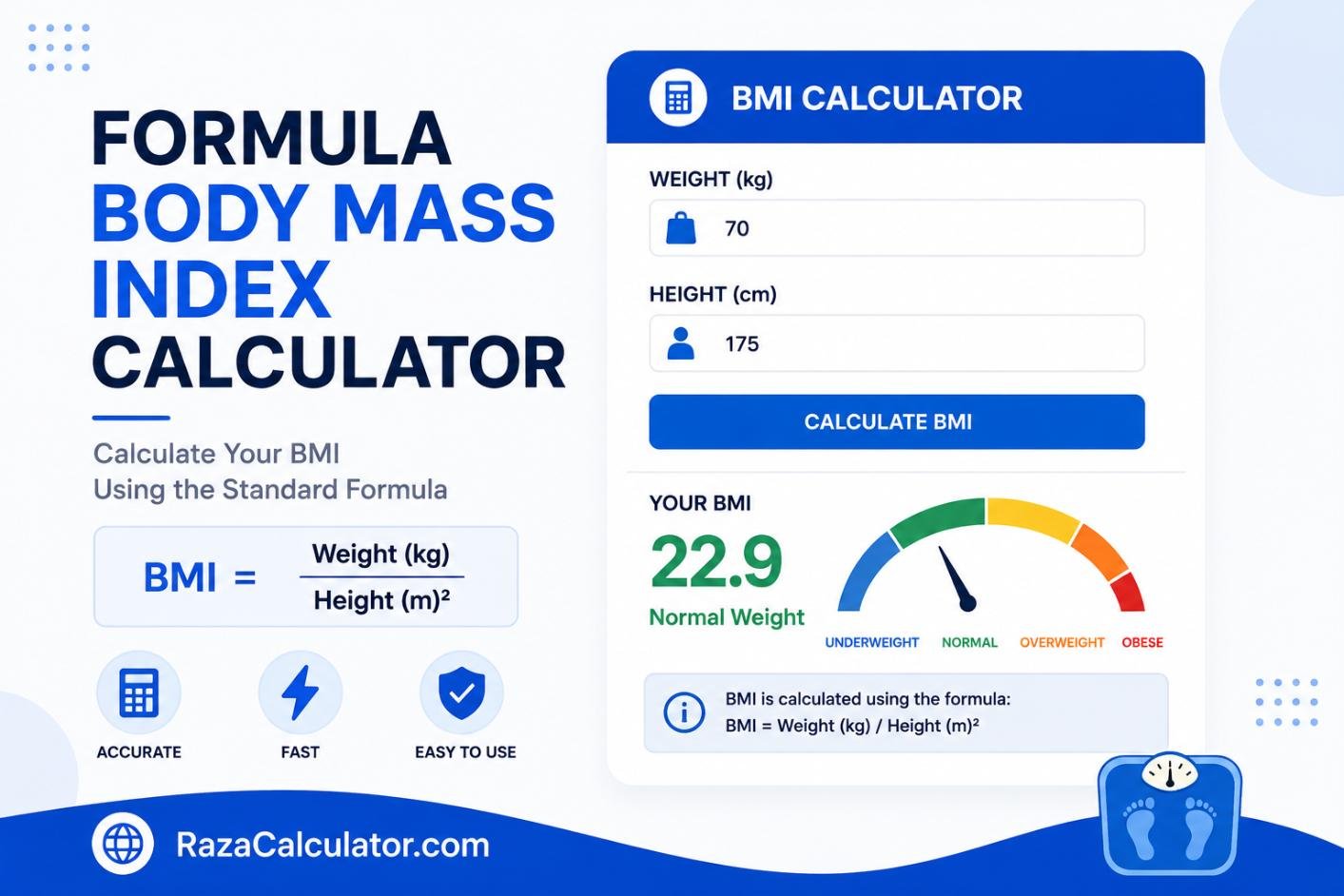
- Pick metric or imperial units.
- Choose WHO or Asian-Pacific as the classification standard.
- Enter your weight and height.
- Review your BMI, category, and healthy weight range together.
Formula
Both formulas return the identical BMI for the same person — unit conversion happens first, and the 703 constant in the imperial version exists purely to correct for pounds and inches instead of kilograms and metres.
Where a BMI of 24 Falls Under Each Standard
One number, two different category outcomes — purely a function of which threshold table is applied.
Features
- Dual classification standards
- Switch between WHO and Asian-Pacific thresholds without changing anything else.
- Unit flexibility
- Metric and imperial both supported, converted automatically.
- Healthy weight range
- Shows the target weight window for your exact height, not just a category label.
- Free and private
- Runs in your browser with no signup required.
Examples
Three quick comparisons make the standard-dependent shift concrete:
170 cm, 65 kg (BMI 22.5): Normal under both WHO and Asian-Pacific standards — comfortably inside each scale's normal band.
165 cm, 68 kg (BMI 25.0): Overweight under WHO's 25.0 boundary, and already in the obese range under Asian-Pacific's lower 25.0 obesity threshold.
180 cm, 78 kg (BMI 24.1): Still normal under WHO, but overweight under Asian-Pacific — the exact boundary case where the two standards disagree.
Formula Body Mass Index Calculator FAQs
Is this tool free?
Yes, both classification standards and both unit systems are free to use.
Which standard should I use?
Asian-Pacific thresholds are commonly recommended for South and East Asian populations, based on regional cardiometabolic risk research, and are widely used by health bodies across those regions. WHO's global standard remains the more widely referenced default elsewhere, including in most international comparisons.
Why do the thresholds differ at all?
Studies found health risks such as diabetes and cardiovascular disease rising at lower BMI values in Asian populations compared to the original WHO reference groups, prompting the adjusted regional thresholds used today.
Does the underlying BMI number change between standards?
No — only the category label changes. The BMI itself is identical regardless of which classification table is selected.
Can BMI alone diagnose a health condition?
No — it's a screening ratio, not a diagnosis. A healthcare provider would consider it alongside other factors.
Does this tool work for children?
No — both classification standards used here apply to adults; children and teens need age- and sex-specific growth charts instead.
Final Word
The same height and weight can land in different categories purely based on which classification table gets applied. Run your numbers through this tool under both standards once, and you'll see exactly where that boundary sits for you.
Try the Formula Body Mass Index Calculator NowReference: WHO's obesity and overweight fact sheet. More tools on razacalculator.com: TDS Calculator, TDS Calculator for Salary, Cut Off Calculator, Engineering Cut Off Calculator, Body Type Calculator, Negative Marking Calculator, and BMI Calculator Female by Age.